Sometimes I think we're just not going to make it. I received a phone call the other day.
"Dave, do we carry sparkling Prosecco?"
"Hm, Prosecco is by definition sparkling."
"Well, do we carry any?"
"Yeah, we carry five different Prosecco's. Two are Brut and three are Extra Dry, a little sweeter."
"Well, they want to taste Aperol this weekend and want to mix it with Prosecco and soda. Will that work? What does Aperol taste like, anyway. I've never tasted it."
"The drink will work fine. Aperol is sort a less bitter Compari. But bitters are flying! Everyone's drinking spritzers with bitters this summer."
Hm. Ok. Thanks"
The marketplace is more competitive every day. How are we going to make it when those in leadership positions don't know the products?
Thursday, August 11, 2011


Tuesday, May 3, 2011
Pairing Pie
Pie is eternal. Food trends come and food trends go, but when trends are slow, foodwriters always come back to pie. And no one can argue. Doesn't mean they have to eat it, "Oh, just a small slice, please!"
Lately, our son Travis has been central to our pie fascination. Of course, when he lived in Brooklyn, pie meant pizza. Visits to New York always involved the pilgrimage to di Fara's out at the end of the city for a slice of the 'round pie' and an order of the 'square.' The former plain cheese and the latter Italian sausage and mushroom.

Now that Trav's moved to Boerne, the pilgrimage is to the Blue Bonnet Cafe in Marble Falls. If the drive is timed right, you can make it in time for pie happy hour, then get one to go! So when he drives up, he shows up with pie. And when we drive down, we show up with pie. And not only that, you have to drive down 281 which is a far superior drive than the dreaded I-35.

The pies are delicious. The problem is the pairing. The problem first presented itself when R.J Shonuff's delicious pralines demanded to be paired with rye whiskey. (See my blog)
Susan and I went down at spring break and picked up a lemon meringue pie. The obvious pairing is lemoncello, which my sister makes and gives at Christmas. She extracts the flavor from Meyer Lemons with 100 proof vodka and Everclear and cuts it 1:1 with simple syrup. Delicious, but with a kick! Poured straight from the freezer, the viscosity dissolves the rich pie into the longest finish imaginable. The next night Travis paired it with a Tequila Daisy. (Here's a recipe!) The edge of the tequila and the lightness of the soda sliced through the pie and rendered it naked on the palate. You could skip the Grand Marnier in the recipe and float the lemoncello and be very glad that you did!
Travis drove up last weekend for a wedding and brought a banana cream pie. The pie was phenomenal, delicious and somehow lightness pervaded the whipped cream and the custard. The lingering nutty buttery crispness of the crust carried through the long finish. Pairing? Old rum of course. But lighter rums, not the dark scrapings of molasses barrels. Plantation Old Reserve 1990 the first night, Pyrat 'Pistol' the second. Both were superb. As the rum is rolled around on the back of the tongue, it picks up all the little bits of pie clinging to the inside of the mouth - just like deglazing a pan - and the resulting 'sauce' is a glorious thing.

Susan's favorite pie is coconut cream. I've just never been a coconut guy, but with the right rum....
Lately, our son Travis has been central to our pie fascination. Of course, when he lived in Brooklyn, pie meant pizza. Visits to New York always involved the pilgrimage to di Fara's out at the end of the city for a slice of the 'round pie' and an order of the 'square.' The former plain cheese and the latter Italian sausage and mushroom.
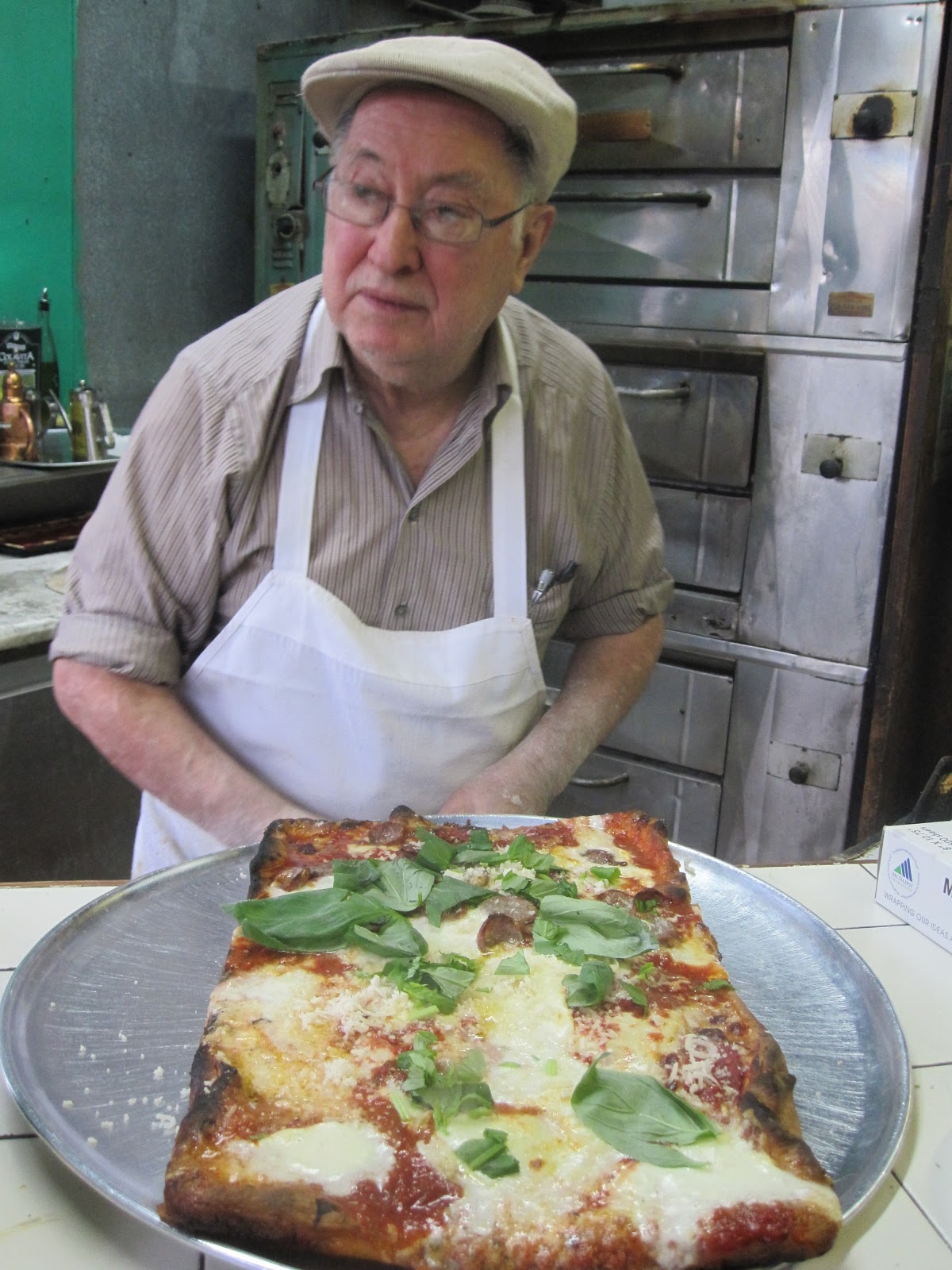
Now that Trav's moved to Boerne, the pilgrimage is to the Blue Bonnet Cafe in Marble Falls. If the drive is timed right, you can make it in time for pie happy hour, then get one to go! So when he drives up, he shows up with pie. And when we drive down, we show up with pie. And not only that, you have to drive down 281 which is a far superior drive than the dreaded I-35.
The pies are delicious. The problem is the pairing. The problem first presented itself when R.J Shonuff's delicious pralines demanded to be paired with rye whiskey. (See my blog)
Susan and I went down at spring break and picked up a lemon meringue pie. The obvious pairing is lemoncello, which my sister makes and gives at Christmas. She extracts the flavor from Meyer Lemons with 100 proof vodka and Everclear and cuts it 1:1 with simple syrup. Delicious, but with a kick! Poured straight from the freezer, the viscosity dissolves the rich pie into the longest finish imaginable. The next night Travis paired it with a Tequila Daisy. (Here's a recipe!) The edge of the tequila and the lightness of the soda sliced through the pie and rendered it naked on the palate. You could skip the Grand Marnier in the recipe and float the lemoncello and be very glad that you did!
Travis drove up last weekend for a wedding and brought a banana cream pie. The pie was phenomenal, delicious and somehow lightness pervaded the whipped cream and the custard. The lingering nutty buttery crispness of the crust carried through the long finish. Pairing? Old rum of course. But lighter rums, not the dark scrapings of molasses barrels. Plantation Old Reserve 1990 the first night, Pyrat 'Pistol' the second. Both were superb. As the rum is rolled around on the back of the tongue, it picks up all the little bits of pie clinging to the inside of the mouth - just like deglazing a pan - and the resulting 'sauce' is a glorious thing.

Susan's favorite pie is coconut cream. I've just never been a coconut guy, but with the right rum....
Friday, April 29, 2011
Great Moments of Retail: v1.05: Or Not
Well, more like, sometimes we just suck! (Blogging live from the retail floor.)
We've really been watching our inventory over the last few years. And that's been a good thing, business wise, it really has. The lines between 'wet,' 'dry' and 'damp' that determine where alcoholic beverages can be sold have been changing with every election lately and with every new area that wants the tax revenue and allows alcohol, we lose market share. It's as simple as that.
And as sales dwindle on the wines that are sold in grocery stores, we're paring inventory. It's really sound business sense. But sometimes too much of a good thing can be a little too much.

Case in point:
Our prosecco sales have been a little slow. Why? For one thing, we have a phenomenal domestic sparkler that sells at a low price and makes life tough for any competition. For another we don't have a prosecco that we feature and push at a competitive price.
BUT it's still late April and we're just entering the high prosecco season. So I put a case of prosecco on my order, but corporate looked at themost recent sales history and just sent four bottles out of the warehouse. We promptly sold one which left three.
At which point a young lady walks into the store just a few minutes ago.
"Which are your driest prosecco's?" she asked.
I pointed to two brands on the shelf. I had 7 of one which sold for $17.99 and 3 of another which sold for $14.99. (You don't need to be told which one I had ordered...)
"Do you have four of that one?" she asked, pointing to less expensive brand.
"I don't know," I lied. "Maybe we have more in the cold box." I offered. (Knowing full well that it was empty- how pathetic!)
"I'm sorry, I needed four, I'm sure I can find them someplace else," she said.
And off she went.
We've really been watching our inventory over the last few years. And that's been a good thing, business wise, it really has. The lines between 'wet,' 'dry' and 'damp' that determine where alcoholic beverages can be sold have been changing with every election lately and with every new area that wants the tax revenue and allows alcohol, we lose market share. It's as simple as that.
And as sales dwindle on the wines that are sold in grocery stores, we're paring inventory. It's really sound business sense. But sometimes too much of a good thing can be a little too much.
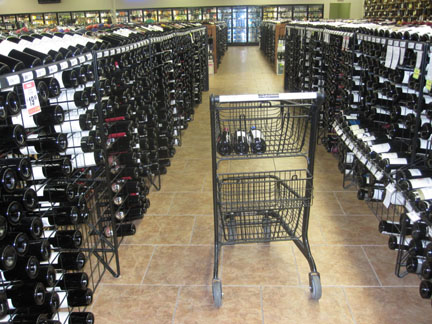
Case in point:
Our prosecco sales have been a little slow. Why? For one thing, we have a phenomenal domestic sparkler that sells at a low price and makes life tough for any competition. For another we don't have a prosecco that we feature and push at a competitive price.
BUT it's still late April and we're just entering the high prosecco season. So I put a case of prosecco on my order, but corporate looked at themost recent sales history and just sent four bottles out of the warehouse. We promptly sold one which left three.
At which point a young lady walks into the store just a few minutes ago.
"Which are your driest prosecco's?" she asked.
I pointed to two brands on the shelf. I had 7 of one which sold for $17.99 and 3 of another which sold for $14.99. (You don't need to be told which one I had ordered...)
"Do you have four of that one?" she asked, pointing to less expensive brand.
"I don't know," I lied. "Maybe we have more in the cold box." I offered. (Knowing full well that it was empty- how pathetic!)
"I'm sorry, I needed four, I'm sure I can find them someplace else," she said.
And off she went.
Tuesday, April 19, 2011
Great Moments of Retail: v1.04: Price Matching
The morning sky was hazy. Like a summer sky but without the heat intensity of a full-on summer morning. Looked like a day that could turn into the first really warm day of late spring. The radio was 'rockin' the Casbah' when the first customer came in with a little scrap torn from the newspaper.
"What is your price on this wine?" she asked the cashier.
"You'll have to check with our wine director, he's over there at his desk."
She came walking in my direction.
"You're hiding!" she said with a smile.
I guess it was true. I was hidden behind a box of zinfandel and my computer screen. "Now that you found me, how can I help?"
She asked me if I could meet a grocery price on either Barefoot or Yellow Tail Pinot Grigio. Well, not just the price, but the case discount off the value card price. I checked. It was barely above our cost. Yikes!
I took a deep breath and countered with my best price. I HAD to make something, so I didn't match, but came very, very close.
"I'm sorry," she said. "But I'm a senior you know and I have to get the best price."
And she walked. For a total of $2.40 on six bottles of wine.
And I breathed a sigh of relief. Our sales on the item are so slow I had only two bottle to sell!!!
"What is your price on this wine?" she asked the cashier.
"You'll have to check with our wine director, he's over there at his desk."
She came walking in my direction.
"You're hiding!" she said with a smile.
I guess it was true. I was hidden behind a box of zinfandel and my computer screen. "Now that you found me, how can I help?"
She asked me if I could meet a grocery price on either Barefoot or Yellow Tail Pinot Grigio. Well, not just the price, but the case discount off the value card price. I checked. It was barely above our cost. Yikes!
I took a deep breath and countered with my best price. I HAD to make something, so I didn't match, but came very, very close.
"I'm sorry," she said. "But I'm a senior you know and I have to get the best price."
And she walked. For a total of $2.40 on six bottles of wine.
And I breathed a sigh of relief. Our sales on the item are so slow I had only two bottle to sell!!!
Wednesday, April 13, 2011
Bordeaux and Burgundy: An Evening with Clive Coates
I guess everyone with a passion for wine has their story of how they were hooked. I was talking with a friend/colleague the other evening when he asked what wine I had tasted that really ignited what has become a sometime passion and a late life career.
I gave a great wine-guy answer. It was a Burgundy. A 1964 Beaune 'Les Boucherottes' from Domaine Parent, the label is still tucked away in my 1974 edition of Frank Schoonmaker's Encylopedia of Wine along with a number of early favorite bottles.
Where did the wine come from? Sigel's. I had a friend who had dropped out of UT law school and wound up working behind the counter of the store at Lemmon and Inwood. (He did OK in the long run, he's now Sigel's executive vice-president.) He had a stash that he kept in the back. That was probably 1975, the wine would have been 11 years old and would certainly not have been kept in optimal storage conditions, but the wine had something to it that kept me buying more.
When the wine was gone and all had been consumed, I spent a number of years searching for that wine and never found it. The bottles that I could afford, just never measured up.
Welcome to Burgundy, some would say.
But I somehow thought that if I just learned enough, I would know enough to find that elusive flavor that was stuck in my memory.
And that's where I entered the wonderful world of wine books. I pored over the pictures and descriptions by the likes of Hugh Johnson. It was something like pornography. Graphic descriptions of expensive, sensuous experience beyond the reach of poor schlub like me.
And one of those great English writers who created the mythic worlds of Bordeaux and Burgundy was Clive Coates. Only Mr. Coates didn't stop with the romantic, mythic world, he went for encyclopedic books of incredible detail, profiling not vintages and appellations, but individual domaines and estates.
So, I was delighted to get the call to work the recent dinner where Clive Coates was the guest of honor.
The event was something of a landmark event in that it was co-sponsored by the Commanderie de Bordeaux and the rival Burgundy group, Confrerie des Chevaliers du Tastevin along with the Chaine des Rotisseurs, Sigel's and the Park City Club, the gracious host of the evening. To satisfy both parties, the wines featured selections from both Burgundy and Bordeaux.
Mr. Coates provided pithy commentary on the wines and pairings in his inimitable style, a lovely British rumbling voice, no sentence without some measure of humorous, twisting invective. I'm a poor reporter, I can't make heads or tail of my notes of exactly what he said and I know I didn't understand quite everything he said. But everything was a story and a story told well.
Since I write a wine blog, a bit about the wines:

Oh, and check out Mr. Coates comments on tasting notes on his website (click here), "Why Tasting Notes are a Waste of Space."
Pascal Doquet Grand Cru Blanc de Blanc Champagne - Straw gold, fine bubbles, baked golden apples with nuts and faint yeasty aromatics. Long mineral finish. Delicate with good authority. 'Grower' champagne - grand cru fruit at a negociant price.
Jean Philippe Fichet 'les Gruyaches' Meursault, 2008. Fat tropical fruit which morphs through notions of smoky nuttiness into lean mineral finish. In the words of Mr. Coates, "premier cru quality at a village wine price" with "ripe acidity."
Claude Dugat Gevrey Chambertin 2005. Dark, deep plums, silky and rich. Big "wow' factor. Slight lift of acid on the finish makes it sparkle. Mr. Coates took the moment to blast the "over-oaked, over-extracted wines of the demonic importer Robert Kacher." (Ironic. Half the evening's wines were Kacher imports. Of all Bobby's wines, the least oaky is Dugat. Robert Kacher has been a mainstay of Sigel's French portfolio for years. We LOVE his wines!)
Bertrand Ambroise Echezeaux 2005. Now if any of Kacher's wines are overextracted and over-oaked, it's the wines from Maison Ambroise, but Mr. Coates was silent on the subject and spoke only of the glories of Echezeaux. Subdued fruits were buried in a mass of mocha and coffee and rich sumptuous structural elegance. The wine was perfect with the rich lamb dish, perhaps the best pairing of the evening.
Chateau Leoville Poyferre 2005 was served with the same course as the Echezaux. It is a powerful, magnificent wine, redolent of young delicous Cabernet Sauvignon. Its roar overwhelmed the sophistication of the lamb dishes. Throw this baby into the ring with some young Napa powerhouses, it will hold its own. "Infanticide" according to Coates.
Chateau Leoville Barton 2000 accompanied, should I say steamrolled the cheese course. Magnificent, still a baby, but starting to show how it will come together, this is great wine. It still features the bottomless pit of cassis that it showed when I tasted a pre-release sample bottle 10 years ago. The once massive tannins are showing signs of integration, this wine has years to go.
Beaumalric Muscat de Beaumes de Venise 2008. As much as I have loved this wine in the past, it shows its shortcomings on a card with the other wines of the night. Sweet, it seemed well, a little muscaty. Even very good has a hard time competing with great.
All in all, a memorable evening. Sometimes the job has its perks!
I gave a great wine-guy answer. It was a Burgundy. A 1964 Beaune 'Les Boucherottes' from Domaine Parent, the label is still tucked away in my 1974 edition of Frank Schoonmaker's Encylopedia of Wine along with a number of early favorite bottles.
Where did the wine come from? Sigel's. I had a friend who had dropped out of UT law school and wound up working behind the counter of the store at Lemmon and Inwood. (He did OK in the long run, he's now Sigel's executive vice-president.) He had a stash that he kept in the back. That was probably 1975, the wine would have been 11 years old and would certainly not have been kept in optimal storage conditions, but the wine had something to it that kept me buying more.
When the wine was gone and all had been consumed, I spent a number of years searching for that wine and never found it. The bottles that I could afford, just never measured up.
Welcome to Burgundy, some would say.
But I somehow thought that if I just learned enough, I would know enough to find that elusive flavor that was stuck in my memory.
And that's where I entered the wonderful world of wine books. I pored over the pictures and descriptions by the likes of Hugh Johnson. It was something like pornography. Graphic descriptions of expensive, sensuous experience beyond the reach of poor schlub like me.
And one of those great English writers who created the mythic worlds of Bordeaux and Burgundy was Clive Coates. Only Mr. Coates didn't stop with the romantic, mythic world, he went for encyclopedic books of incredible detail, profiling not vintages and appellations, but individual domaines and estates.
So, I was delighted to get the call to work the recent dinner where Clive Coates was the guest of honor.
The event was something of a landmark event in that it was co-sponsored by the Commanderie de Bordeaux and the rival Burgundy group, Confrerie des Chevaliers du Tastevin along with the Chaine des Rotisseurs, Sigel's and the Park City Club, the gracious host of the evening. To satisfy both parties, the wines featured selections from both Burgundy and Bordeaux.
Mr. Coates provided pithy commentary on the wines and pairings in his inimitable style, a lovely British rumbling voice, no sentence without some measure of humorous, twisting invective. I'm a poor reporter, I can't make heads or tail of my notes of exactly what he said and I know I didn't understand quite everything he said. But everything was a story and a story told well.
Since I write a wine blog, a bit about the wines:

Oh, and check out Mr. Coates comments on tasting notes on his website (click here), "Why Tasting Notes are a Waste of Space."
Pascal Doquet Grand Cru Blanc de Blanc Champagne - Straw gold, fine bubbles, baked golden apples with nuts and faint yeasty aromatics. Long mineral finish. Delicate with good authority. 'Grower' champagne - grand cru fruit at a negociant price.
Jean Philippe Fichet 'les Gruyaches' Meursault, 2008. Fat tropical fruit which morphs through notions of smoky nuttiness into lean mineral finish. In the words of Mr. Coates, "premier cru quality at a village wine price" with "ripe acidity."
Claude Dugat Gevrey Chambertin 2005. Dark, deep plums, silky and rich. Big "wow' factor. Slight lift of acid on the finish makes it sparkle. Mr. Coates took the moment to blast the "over-oaked, over-extracted wines of the demonic importer Robert Kacher." (Ironic. Half the evening's wines were Kacher imports. Of all Bobby's wines, the least oaky is Dugat. Robert Kacher has been a mainstay of Sigel's French portfolio for years. We LOVE his wines!)
Bertrand Ambroise Echezeaux 2005. Now if any of Kacher's wines are overextracted and over-oaked, it's the wines from Maison Ambroise, but Mr. Coates was silent on the subject and spoke only of the glories of Echezeaux. Subdued fruits were buried in a mass of mocha and coffee and rich sumptuous structural elegance. The wine was perfect with the rich lamb dish, perhaps the best pairing of the evening.
Chateau Leoville Poyferre 2005 was served with the same course as the Echezaux. It is a powerful, magnificent wine, redolent of young delicous Cabernet Sauvignon. Its roar overwhelmed the sophistication of the lamb dishes. Throw this baby into the ring with some young Napa powerhouses, it will hold its own. "Infanticide" according to Coates.
Chateau Leoville Barton 2000 accompanied, should I say steamrolled the cheese course. Magnificent, still a baby, but starting to show how it will come together, this is great wine. It still features the bottomless pit of cassis that it showed when I tasted a pre-release sample bottle 10 years ago. The once massive tannins are showing signs of integration, this wine has years to go.
Beaumalric Muscat de Beaumes de Venise 2008. As much as I have loved this wine in the past, it shows its shortcomings on a card with the other wines of the night. Sweet, it seemed well, a little muscaty. Even very good has a hard time competing with great.
All in all, a memorable evening. Sometimes the job has its perks!
Friday, April 8, 2011
Pretty Good Milkshake
Or to be more precise, "That's a pretty fucking good milkshake. I don't know if it's worth five dollars but it's pretty fucking good."
-Vincent Vega, Pulp Fiction
Got to taste the new Casa Dragones Tequila today. Retails in the $300 range. Just like Vincent Vega and Mia's legendary $5 milkshake, I was interested in seeing what a $300 silver tequila has to offer. And what can they do to an agave bulb to make it cost that much?
 One thing they do when pouring it at a tasting is use good glassware. Casa Dragones furnished a special Riedel glass with tall glass sides. The clear tequila looked smashing! The clarity is brilliant.
The nosing (in fact the whole tasting) is structured. The goal is for every taster to experience every nuance and not just toss it back. I didn't really figure out how to smell the aromas at the bottom of the glass... but here's what I got. Sweet agave surrounding wild herbal spices that suggest white pepper but that don't bring the white pepper. Instead you're left with notions of honey and vanilla. Very clean, very long, very precise.
Tasting notes follow the same order, but build on each other in layers of intensity. The layers build and resonate as the silky liquid coats the mouth. Opposites abound. Complex/precise. Sweet/herbal. Light/oily. Powerful/delicate. The rich volcanic soils of the valley make themselves felt in the intense wild herbal alkaloid flavors. These plants are not rushed, they are allowed to ripen to full maturity and the resulting sweetness matches but doesn't overpower the herbal intensity. The long finish hangs forever, in soft clouds of delicate vanilla.
But that all sounds like a great silver tequila. Except where did that vanilla come in? And those odd suggestions of toasted nuts.
The agave 'pinas' are not cooked in the steam autoclaves or gas fired ovens (hornos) as are traditional tequilas. The nectar is extracted prior to being cooked, yielding a pure flavor. The spirit is distilled in column stills which allow careful control of the condensation.
Now here's the trick. Some of the tequila is aged five years (making it 'extra anejo') in new toasted oak barrels. This extra anejo is then blended back into silver tequila, giving the tequila is 'joven' designation. Any color is filtered out, leaving the brilliant clear distillate.
Whatever. I bought the story. And, it's exceptional tequila!
-Vincent Vega, Pulp Fiction
Got to taste the new Casa Dragones Tequila today. Retails in the $300 range. Just like Vincent Vega and Mia's legendary $5 milkshake, I was interested in seeing what a $300 silver tequila has to offer. And what can they do to an agave bulb to make it cost that much?
 One thing they do when pouring it at a tasting is use good glassware. Casa Dragones furnished a special Riedel glass with tall glass sides. The clear tequila looked smashing! The clarity is brilliant.
The nosing (in fact the whole tasting) is structured. The goal is for every taster to experience every nuance and not just toss it back. I didn't really figure out how to smell the aromas at the bottom of the glass... but here's what I got. Sweet agave surrounding wild herbal spices that suggest white pepper but that don't bring the white pepper. Instead you're left with notions of honey and vanilla. Very clean, very long, very precise.
Tasting notes follow the same order, but build on each other in layers of intensity. The layers build and resonate as the silky liquid coats the mouth. Opposites abound. Complex/precise. Sweet/herbal. Light/oily. Powerful/delicate. The rich volcanic soils of the valley make themselves felt in the intense wild herbal alkaloid flavors. These plants are not rushed, they are allowed to ripen to full maturity and the resulting sweetness matches but doesn't overpower the herbal intensity. The long finish hangs forever, in soft clouds of delicate vanilla.
But that all sounds like a great silver tequila. Except where did that vanilla come in? And those odd suggestions of toasted nuts.
The agave 'pinas' are not cooked in the steam autoclaves or gas fired ovens (hornos) as are traditional tequilas. The nectar is extracted prior to being cooked, yielding a pure flavor. The spirit is distilled in column stills which allow careful control of the condensation.
Now here's the trick. Some of the tequila is aged five years (making it 'extra anejo') in new toasted oak barrels. This extra anejo is then blended back into silver tequila, giving the tequila is 'joven' designation. Any color is filtered out, leaving the brilliant clear distillate.
Whatever. I bought the story. And, it's exceptional tequila!
Saturday, March 26, 2011
Whiskey Seminar: Woodford Reserve
A tasting seminar with Woodford Reserve Master Distiller Chris Morris raised the big question about branded spirits: where's the fine line between branded marketing and artisanal quality? Whisk(e)y producers from both Kentucky and Scotland love to cloak themselves in the aura of old traditional products, produced back in the hills for generation on generation. In truth, the modern distilleries in both countries have their roots firmly planted in the industrial revolution.
Mr. Morris was very up front with the issue. While there over 300 brands of Kentucky whiskey on the market, there are only 10 distilleries, a fact that is at odds with the current fascination with local and authentic sourcing. Mr. Miller emphasizes this fact since Woodford Reserve is a single brand that comes from a single distillery, leaving over 299 brands to come out of the remaining 9.
But Woodford is a young brand. It was the vision of Owsley Brown, chairman of Brown-Forman, the large (but family held) diversified producer of wines and spirits who saw the need for a super-premium Kentucky Bourbon. It was released in Kentucky in 1996. After four years, the market was expanded into neighboring states, then was released nationwide. Not exactly your grand-daddy's mythic whiskey.
So, when the clouds of marketing are swept away, how's the product? Pretty tasty. And for solid reasons that will ring true with artisanal authenticity.

Grain: 72% food grade #1 dimple yellow corn grown in Shelby County, Ky.,18% Dakota grown rye, 10% Milwaukee Malted Barley. Most Bourbon recipes use 5%. Malted Barley provides enzymes that help release the sugars.
Water: unfiltered limestone well water. No surface water which is required to be treated by the FDA.
Yeast: like most distilleries, they grow their own. However they only used a small amount of the sour mash and ferment twice as long as most distilleries to give a rich, flowery, fruity character to the beer.
Pot still: triple distillation utilizing three copper pot stills. The lower temperature of the pot stills brings more flavors through the distillation.
Maturation: Barrels are wine toasted before charring. The whiskey is proofed to 110 before barrel entry. Barrels are selected by flavor in lots of 100 for bottling. The last batch Chris bottled had dates ranging from Nov 2002 to March 2003 making the whiskey 8-9 years old.
They did their homework and made all the right-sounding decisions about putting a product together. How does it taste?
Complex aromas of vanilla wafers, butter, butterscotch, pralines, burnt orange and cinnamon are framed by floral perfumes. The whiskey is smooth and luxurious on the palate with notes of vanilla, honey, and butterscotch followed by spicy orange peel and caramel with anise highlights and a long finish with vanilla and white chocolate. Delicious by itself, dry enough to use for cocktails.
Mr. Morris was very up front with the issue. While there over 300 brands of Kentucky whiskey on the market, there are only 10 distilleries, a fact that is at odds with the current fascination with local and authentic sourcing. Mr. Miller emphasizes this fact since Woodford Reserve is a single brand that comes from a single distillery, leaving over 299 brands to come out of the remaining 9.
But Woodford is a young brand. It was the vision of Owsley Brown, chairman of Brown-Forman, the large (but family held) diversified producer of wines and spirits who saw the need for a super-premium Kentucky Bourbon. It was released in Kentucky in 1996. After four years, the market was expanded into neighboring states, then was released nationwide. Not exactly your grand-daddy's mythic whiskey.
So, when the clouds of marketing are swept away, how's the product? Pretty tasty. And for solid reasons that will ring true with artisanal authenticity.

Grain: 72% food grade #1 dimple yellow corn grown in Shelby County, Ky.,18% Dakota grown rye, 10% Milwaukee Malted Barley. Most Bourbon recipes use 5%. Malted Barley provides enzymes that help release the sugars.
Water: unfiltered limestone well water. No surface water which is required to be treated by the FDA.
Yeast: like most distilleries, they grow their own. However they only used a small amount of the sour mash and ferment twice as long as most distilleries to give a rich, flowery, fruity character to the beer.
Pot still: triple distillation utilizing three copper pot stills. The lower temperature of the pot stills brings more flavors through the distillation.
Maturation: Barrels are wine toasted before charring. The whiskey is proofed to 110 before barrel entry. Barrels are selected by flavor in lots of 100 for bottling. The last batch Chris bottled had dates ranging from Nov 2002 to March 2003 making the whiskey 8-9 years old.
They did their homework and made all the right-sounding decisions about putting a product together. How does it taste?
Complex aromas of vanilla wafers, butter, butterscotch, pralines, burnt orange and cinnamon are framed by floral perfumes. The whiskey is smooth and luxurious on the palate with notes of vanilla, honey, and butterscotch followed by spicy orange peel and caramel with anise highlights and a long finish with vanilla and white chocolate. Delicious by itself, dry enough to use for cocktails.
Subscribe to:
Posts (Atom)

