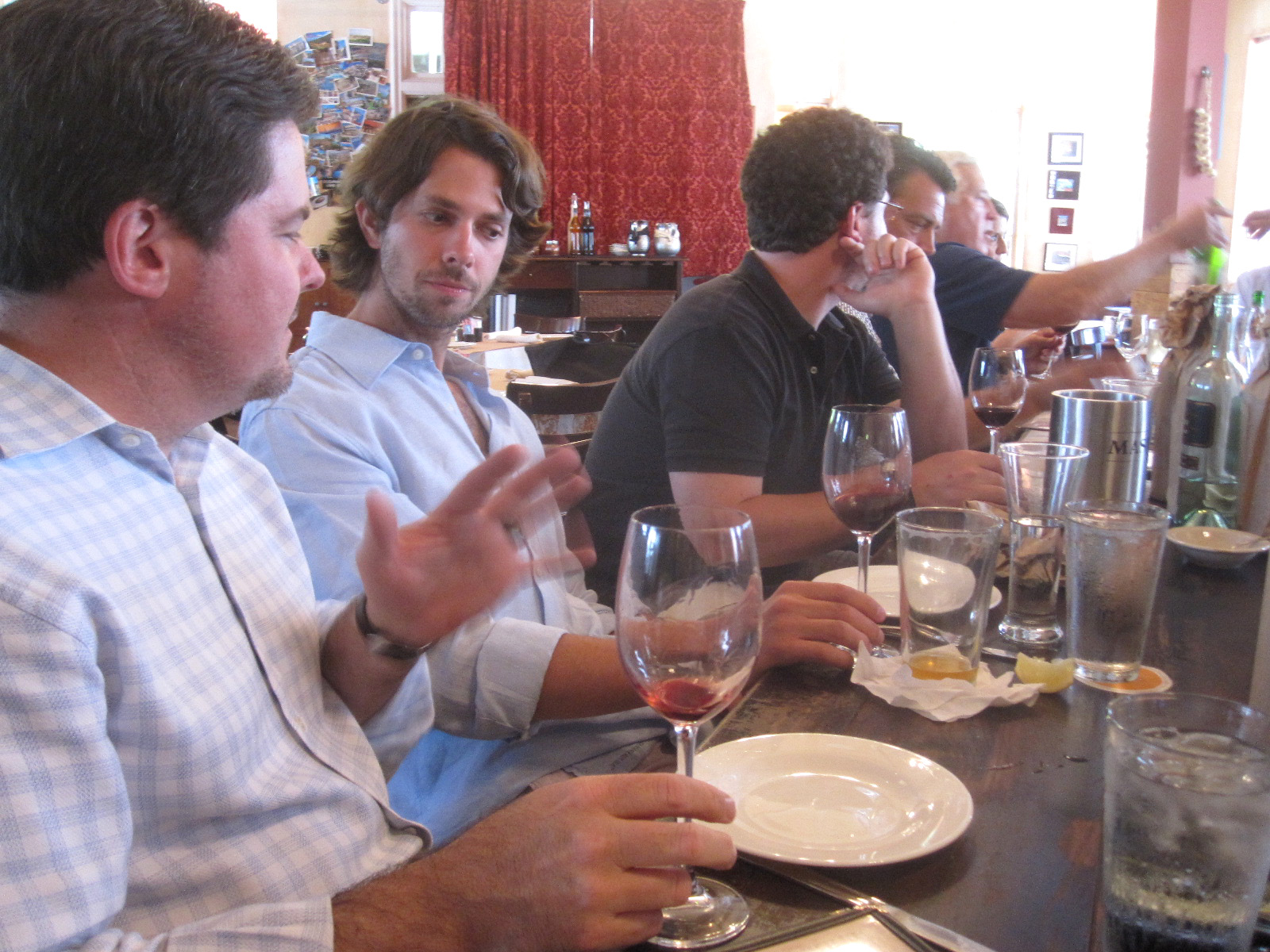
The sun has been relentless this summer. The 100 degree days started early and stayed and stayed for an old school 'Baked Dallas Summer' before finally breaking a couple of days ago. Maybe that's why the shipment of Provencal rose wines sold out so fast. They came in late and flew out of the stores. Light, crisp and dry with sometimes delicate, sometimes not-so-delicate hints of strawberries, raspberries and cherries, they provide a delicious foil to the oppressive heat.
And the wines come from all over. France, Spain, California, South Africa and Australia. Some friends were in the store yesterday looking for a rose from Oregon they bought from my son during their stay in Santa Fe. (I hate it when he sells my customers wines I can't get!!!) I sold them some bottles from the last case of one of my favorites, the wine from Mas Carlot in the Costieres de Nimes (ironic, because Noel is French!)
But the real jewel was the last rose to come into the store. It's from Chateau Haut-Bailly and it is special in a couple of ways. First and foremost, the wine is delicious, but delicious in a totally different way from the simpler wines from the south. The fruit notes are the same, but instead of smelling like fresh berries, the subtle flavor is the perfume of berries. The wine seems crisp but the acids run below and support the rich lingering creaminess of the perfumed fruits. Fresh, but perfumed. Crisp, but creamy. I'm smiling as I sit and remember the wine.
But the wine should be good. It's from a highly regarded Bordeaux estate from Pessac-Leognan and it's the first opportunity to taste wine from the spectacular 2009 vintage. The rose is 100% Cabernet Sauvignon bled from tanks of juice destined for the estates first label wine, Chateau Haut-Bailly, which Robert Parker rated 96-98 points and suggested that it may be "the greatest Haut-Bailly ever made."
A rare treat indeed.
Thursday, August 26, 2010
Tuesday, July 20, 2010
Ah, Sweet, Sweet Bitters, in Search of a Better Cocktail
It was an early rise on my day off. Heading across town in the summer morning to meet with Matteo Luxardo and taste through his family's legendary wares.
The Luxardo company has been in existence since 1821 when Girolamo Luxardo moved the family from Genoa to Zara, on the Dalmatian coast to establish a Maraschino distillery, the region being the only habitat for the Marasca cherry. The company became one of the largest liqueur producers in Italy, exporting the Luxardo Maraschino liqueur around the world. After the factory was destroyed during World War II, it was rebuilt south of Padua, where they planted a 200 acre cherry orchard. Today the family still owns and manages the company which produces a range of 11 liqueurs plus their famous Marasca cherries, both in syrup and jam.
So why is it so special?
Because better cocktails demand better ingredients. Period. End of story. Great spirits are the base. Great flavoring agents are the modifiers. The Luxardo products are uniformly precise in flavor definition. Flavors are intense without being overpowering, sweet without being cloying. The intensity of flavor combined with seeming lightness make the Luxardo products such great flavoring agents. I'll just run briefly through my tasting notes.
Limoncello - Made from Sicilian lemons which are large, with thick skins and a thick zest. Bright yellow and transparent. Brilliant lemon zest with a long bright finish. Sweet but never loses the sense of tartness. Filtered to meet market expectations of clarity, but an unfiltered will be available in the near future. Most commonly served straight up from the freezer. Add soda for a refreshing summer cooler. Or it will make a great sno-cone!
Italian Triplum Triple-sec - Wow, this is intense stuff! Initial aromatic attack of bitter orange that becomes richer and sweeter on the floral finish. Made with with bitter oranges, sweet oranges, mandarin oranges and orange blossoms. For me, this product redefines triple-sec.
Maraschino Liqueur - Clear liqueur with intense, deep, rich essence of cherry. White and milk chocolates come from the depth of the natural flavor of the Marasca cherries. Hints of almond aromatics come from the pits. The product is pure cherry. Fruit comes from the 22,000 trees in the Luxardo orchards in the Euganean Hills near Padua. After fermentation and maturation in larch vats, the juice is distilled in small pot stills and aged for two years in Finnish ash before dilution and bottling. Excellent over fruit and an essential element to a well stocked bar.
Amaretto di Saschira - Light essence of almond with hints of caramel. I'm drinking the macaroons my grandmother used to buy at Henri's Bakery in Atlanta 50 years ago (Until today I always thought it was Henry's!). Made from pure almond paste from Sicilain almonds, aged in larch vats to mature the spirit before bottling. No apricot pits, peach pits or concentrated flavorings. Another product redefined!
Sambuca di Cesari - All Mediterranean countries have their anise based spirit, Sambuca is strictly Italian. An infusion of elderberries (Sambuca nigra) grown near the distillery and green anniseed, the clear liqueur has rich anise flavor and viscous, thick mouthfeel and is not as sweet as one would expect. Elderberries have long been known for their digestive and tonic benefits.
An impressive portfolio of liqueurs. The overarching uniformity of style is noteworthy. All products other than the maraschino and the grappa are infusions which use a distillation of beet sugars as the alcohol base. Matteo says they use the beet product because of the sweetness and neutrality of the spirits.
We also tasted the Luxardo Marasca Cherries themselves which are just unreal. The color of the fruit and the syrup is a deep, dark unctuous red and that's just the way they taste. Simply put, they transform cocktails. Try a Manhattan made with an outstanding rye whiskey, a high quality sweet vermouth and a Luxardo Marasca cherry and you'll be a believer. Or just put one on a chocolate sundae! Become a believer.
And that was the end of the regular meeting. Grappa and Bitters were available for the hardcore.
Grappa Euganea - Made from Cabernet Sauvignon, Cabernet Franc and Merlot grown in the Euganean Hills in Veneto. Slightly smoky and nutty aromatics are followed by a warm and viscous grappa. Does not have the burn and jet-fuel characteristics of most grappa.
Luxardo Amaro Abano - Amaro means bitter. Abano Amaro is a medium bitter with sweet smoky bitter orange with cinammon, cardomom and long warm finish infused with sweet bitter (yes!) herbs. Very approachable. Traditionally a digestive, a favorite with the new mixologists.
Luxardo Bitters - A Campari-type aperitif in the Luxardo style. The flavorings come from the infusion of several herbs and spices such as sweet orange, bitter orange, rhubarb, mint, marjoram and thyme. Drink it before dinner to stimulate the appetite.
Luxardo Fernet - A bracing attack of bitter herbs fused with sweet fruit and eucalyptus sustained by overwhelming aromatics that hang around.
The hardcore group was buzzing with excitement at the conclusion. Most of the products are in stock most of the time at Sigel's. We hope to have the three bitters on the shelf soon.
The morning sun had intensified when we wandered into the parking lot and our next destination was not in question: Drip Coffee for a double shot of the best espresso in Dallas.
Better make that a double-double.
The Luxardo company has been in existence since 1821 when Girolamo Luxardo moved the family from Genoa to Zara, on the Dalmatian coast to establish a Maraschino distillery, the region being the only habitat for the Marasca cherry. The company became one of the largest liqueur producers in Italy, exporting the Luxardo Maraschino liqueur around the world. After the factory was destroyed during World War II, it was rebuilt south of Padua, where they planted a 200 acre cherry orchard. Today the family still owns and manages the company which produces a range of 11 liqueurs plus their famous Marasca cherries, both in syrup and jam.
So why is it so special?
Because better cocktails demand better ingredients. Period. End of story. Great spirits are the base. Great flavoring agents are the modifiers. The Luxardo products are uniformly precise in flavor definition. Flavors are intense without being overpowering, sweet without being cloying. The intensity of flavor combined with seeming lightness make the Luxardo products such great flavoring agents. I'll just run briefly through my tasting notes.
Limoncello - Made from Sicilian lemons which are large, with thick skins and a thick zest. Bright yellow and transparent. Brilliant lemon zest with a long bright finish. Sweet but never loses the sense of tartness. Filtered to meet market expectations of clarity, but an unfiltered will be available in the near future. Most commonly served straight up from the freezer. Add soda for a refreshing summer cooler. Or it will make a great sno-cone!
Italian Triplum Triple-sec - Wow, this is intense stuff! Initial aromatic attack of bitter orange that becomes richer and sweeter on the floral finish. Made with with bitter oranges, sweet oranges, mandarin oranges and orange blossoms. For me, this product redefines triple-sec.
Maraschino Liqueur - Clear liqueur with intense, deep, rich essence of cherry. White and milk chocolates come from the depth of the natural flavor of the Marasca cherries. Hints of almond aromatics come from the pits. The product is pure cherry. Fruit comes from the 22,000 trees in the Luxardo orchards in the Euganean Hills near Padua. After fermentation and maturation in larch vats, the juice is distilled in small pot stills and aged for two years in Finnish ash before dilution and bottling. Excellent over fruit and an essential element to a well stocked bar.
Amaretto di Saschira - Light essence of almond with hints of caramel. I'm drinking the macaroons my grandmother used to buy at Henri's Bakery in Atlanta 50 years ago (Until today I always thought it was Henry's!). Made from pure almond paste from Sicilain almonds, aged in larch vats to mature the spirit before bottling. No apricot pits, peach pits or concentrated flavorings. Another product redefined!
Sambuca di Cesari - All Mediterranean countries have their anise based spirit, Sambuca is strictly Italian. An infusion of elderberries (Sambuca nigra) grown near the distillery and green anniseed, the clear liqueur has rich anise flavor and viscous, thick mouthfeel and is not as sweet as one would expect. Elderberries have long been known for their digestive and tonic benefits.
An impressive portfolio of liqueurs. The overarching uniformity of style is noteworthy. All products other than the maraschino and the grappa are infusions which use a distillation of beet sugars as the alcohol base. Matteo says they use the beet product because of the sweetness and neutrality of the spirits.
We also tasted the Luxardo Marasca Cherries themselves which are just unreal. The color of the fruit and the syrup is a deep, dark unctuous red and that's just the way they taste. Simply put, they transform cocktails. Try a Manhattan made with an outstanding rye whiskey, a high quality sweet vermouth and a Luxardo Marasca cherry and you'll be a believer. Or just put one on a chocolate sundae! Become a believer.
And that was the end of the regular meeting. Grappa and Bitters were available for the hardcore.
Grappa Euganea - Made from Cabernet Sauvignon, Cabernet Franc and Merlot grown in the Euganean Hills in Veneto. Slightly smoky and nutty aromatics are followed by a warm and viscous grappa. Does not have the burn and jet-fuel characteristics of most grappa.
Luxardo Amaro Abano - Amaro means bitter. Abano Amaro is a medium bitter with sweet smoky bitter orange with cinammon, cardomom and long warm finish infused with sweet bitter (yes!) herbs. Very approachable. Traditionally a digestive, a favorite with the new mixologists.
Luxardo Bitters - A Campari-type aperitif in the Luxardo style. The flavorings come from the infusion of several herbs and spices such as sweet orange, bitter orange, rhubarb, mint, marjoram and thyme. Drink it before dinner to stimulate the appetite.
Luxardo Fernet - A bracing attack of bitter herbs fused with sweet fruit and eucalyptus sustained by overwhelming aromatics that hang around.
The hardcore group was buzzing with excitement at the conclusion. Most of the products are in stock most of the time at Sigel's. We hope to have the three bitters on the shelf soon.
The morning sun had intensified when we wandered into the parking lot and our next destination was not in question: Drip Coffee for a double shot of the best espresso in Dallas.
Better make that a double-double.
Saturday, July 17, 2010
Oops!! Has It Been THAT Long?
Evidently.
(I'm always writing in my head, just not on the keyboard.)
Where to begin. Rather than going way back, I'll just stay in the recent past. Which was vacation. We spent some nice days in Santa Fe with Michael and Laura, an amazing day in the canyons and mountains of Boulder, Utah with Mary and Glen, and a couple of spectacular drives in between the two.
Naturally, highlights were meals.
Visits to Santa Fe always begin with Margaritas, Carne Adovada and Blue Corn Enchiladas at Maria's. Maria's has the best selection of tequila and the biggest list of Margaritas in my known universe. The serious overindulgence is always followed the next morning by a massive breakfast at Tecolote Cafe. My fave: Atole Pinon pancake topped with an egg over-easy, jalapeno bacon and green chile. Oh, and warm maple syrup on the pancake not blessed by the chile. Oh my. I could drive the eleven hours to Santa Fe, eat at Maria's, eat at Tecolote and drive back home and have had a great trip.
But the greatest meals are when we cook at Michael and Laura's. They do like to eat and drink and are such great company! Michael is a manager at Susan's Fine Wine and Spirits, the best wine and spirits shop in Santa Fe and I always bring a bottle or two, so we do drink well.
We had some good cheese to start and a bottle of Mas Carlot 2009 Rose, which had just come off the container the day before. Intense strawberries and raspberries jumped from the glass. Wild cherries joined the party on the palate and were kissed on the finish by gentle acidity. Delicious, but the bottle was gone in a flash! Laura took the helm in the kitchen and fixed pork chops with bacon and sage in a vinaigrette glaze. We had some asparagus and I chipped in with a mushroom risotto, and we enjoyed a bottle of Brian Loring's 2007 Russell Vineyard Pinot Noir. The wine met the savory pork with intense wild black berry fruits and the risotto brought out a touch of earthiness from the wine.
The next day's late afternoon sun found us driving across the northern head waters of Lake Powell at the junction of the Colorado and Dirty Devil Rivers and through the spectacular deep red palisades of Fry Canyon. A ghostly twilight drive gave us a taste of the massive formations of the Capitol Reef and then we pushed over the 9600' summit of Boulder Mountain in the dark, surprising elk, deer and herds of cattle who thought the road was theirs at that late hour.
In the midst of the mountains and slick rock canyons lies the oasis of Boulder, Utah. The fertile valleys were farmed first by the Fremont culture and later by Mormon farmers. For years the village was a dairy center as the cattle grazed on the lush mountain meadows.
We spent the next day driving up the spine of the Capitol Reef. It can only be described as driving up a trench in the middle of the ocean bed, only there's no water at all. After the long hot drive, we discovered delicious pastrami burgers at Slacker's in Torrey, then headed up over the mountain to Mary and Glen's vintage Shasta 'Canned Ham' trailer where we enjoyed a bottle of sparkling wine and margaritas. Well fortified, we raced down the mountain to dinner.
Our goal was the Boulder Mountain Lodge and the Hell's Backbone Grill. The restaurant is run by two visionary women, Blake Spalding and Jennifer Castle who are dedicated to local sourcing. They have their own farm and gardens, raise hens for eggs, meat is locally produced, the goal is local, organic and sustainable. Not only that, they are lovely, charming and amazing women who produce delicious food. My sister Mary has gotten to be good friends with them so Blake joined us at our table and guided our selections. Salads with local greens, radish vichysoisse, enchiladas with tender young tumbleweeds, trout, bison filets, tender lamb and rich ice creams with eggs supplied by Blake's 'girls' (her hens.)
Of course with wine. Did I mention the wine? Before dinner we shared another bottle of new Rose, this time from Mas Guiot. Similar to the Carlot but Francois and Sylvia always get a touch of dark black cherry in their rose. We enjoyed the wine on the porch behind our room overlooking the marsh/pond with Reef formations and Boulder Mountain off in the distance. Two bottles with dinner, first a bottle of 2008 Melville Inox Chardonnay. Single clone, meticulously farmed chardonnay, cold soaked, cold fermented, stainless steel, minimum handling. Edgy, nervous, laser beam of intense flavor. I love it! The wine sliced through the vichysoisse and made the trout sing. And another bottle of 2007 Loring Pinot Noir. This time, from the Brousseau vineyard, grown the sparse Pinnacle highlands of the Chalone AVA. Dark, rich and brooding, it was the perfect foil for the tender lamb and spice-rubbed bison filets.
After a late breakfast at the Grill, we headed over the mountain and through the canyons back to Santa Fe and a last meal with Michael and Laura. I found a Brunello at Michael's store and though it was way too young, I just had to have it. Casanova di Neri Tenuta Nuova 2004. I've enjoyed both the Rosso and base level Brunello over the last few months, so it only seemed natural. I mean professionally speaking and all... The wine was big, intense and young, so I splash decanted it twice and let it breath for a couple of hours and then poured through a Vinturi aerator. It was still big and intense, but the manipulation pulled an amazing amount of the dark, hoisin tinged black cherry fruit out of the wine so that the fruit helped mask the wine's massive structure.
To match the wine I seared and pan roasted a pork tenderloin and sauced it with mushrooms in an intense wine reduction accompanied by gnocchi tossed in brown butter and sage from their garden. And Parmigiano out of hand as we wiped out plates and finished the bottle.
Pralines and Cream Ice Cream for dessert.
I was happy. We all were happy.
We headed back to Dallas where Susan immediately had two root canals. Yes, she did the whole trip flying on hydrocodone!
(I'm always writing in my head, just not on the keyboard.)
Where to begin. Rather than going way back, I'll just stay in the recent past. Which was vacation. We spent some nice days in Santa Fe with Michael and Laura, an amazing day in the canyons and mountains of Boulder, Utah with Mary and Glen, and a couple of spectacular drives in between the two.
Naturally, highlights were meals.
Visits to Santa Fe always begin with Margaritas, Carne Adovada and Blue Corn Enchiladas at Maria's. Maria's has the best selection of tequila and the biggest list of Margaritas in my known universe. The serious overindulgence is always followed the next morning by a massive breakfast at Tecolote Cafe. My fave: Atole Pinon pancake topped with an egg over-easy, jalapeno bacon and green chile. Oh, and warm maple syrup on the pancake not blessed by the chile. Oh my. I could drive the eleven hours to Santa Fe, eat at Maria's, eat at Tecolote and drive back home and have had a great trip.But the greatest meals are when we cook at Michael and Laura's. They do like to eat and drink and are such great company! Michael is a manager at Susan's Fine Wine and Spirits, the best wine and spirits shop in Santa Fe and I always bring a bottle or two, so we do drink well.
We had some good cheese to start and a bottle of Mas Carlot 2009 Rose, which had just come off the container the day before. Intense strawberries and raspberries jumped from the glass. Wild cherries joined the party on the palate and were kissed on the finish by gentle acidity. Delicious, but the bottle was gone in a flash! Laura took the helm in the kitchen and fixed pork chops with bacon and sage in a vinaigrette glaze. We had some asparagus and I chipped in with a mushroom risotto, and we enjoyed a bottle of Brian Loring's 2007 Russell Vineyard Pinot Noir. The wine met the savory pork with intense wild black berry fruits and the risotto brought out a touch of earthiness from the wine.
The next day's late afternoon sun found us driving across the northern head waters of Lake Powell at the junction of the Colorado and Dirty Devil Rivers and through the spectacular deep red palisades of Fry Canyon. A ghostly twilight drive gave us a taste of the massive formations of the Capitol Reef and then we pushed over the 9600' summit of Boulder Mountain in the dark, surprising elk, deer and herds of cattle who thought the road was theirs at that late hour.
In the midst of the mountains and slick rock canyons lies the oasis of Boulder, Utah. The fertile valleys were farmed first by the Fremont culture and later by Mormon farmers. For years the village was a dairy center as the cattle grazed on the lush mountain meadows.
We spent the next day driving up the spine of the Capitol Reef. It can only be described as driving up a trench in the middle of the ocean bed, only there's no water at all. After the long hot drive, we discovered delicious pastrami burgers at Slacker's in Torrey, then headed up over the mountain to Mary and Glen's vintage Shasta 'Canned Ham' trailer where we enjoyed a bottle of sparkling wine and margaritas. Well fortified, we raced down the mountain to dinner.
Our goal was the Boulder Mountain Lodge and the Hell's Backbone Grill. The restaurant is run by two visionary women, Blake Spalding and Jennifer Castle who are dedicated to local sourcing. They have their own farm and gardens, raise hens for eggs, meat is locally produced, the goal is local, organic and sustainable. Not only that, they are lovely, charming and amazing women who produce delicious food. My sister Mary has gotten to be good friends with them so Blake joined us at our table and guided our selections. Salads with local greens, radish vichysoisse, enchiladas with tender young tumbleweeds, trout, bison filets, tender lamb and rich ice creams with eggs supplied by Blake's 'girls' (her hens.)
Of course with wine. Did I mention the wine? Before dinner we shared another bottle of new Rose, this time from Mas Guiot. Similar to the Carlot but Francois and Sylvia always get a touch of dark black cherry in their rose. We enjoyed the wine on the porch behind our room overlooking the marsh/pond with Reef formations and Boulder Mountain off in the distance. Two bottles with dinner, first a bottle of 2008 Melville Inox Chardonnay. Single clone, meticulously farmed chardonnay, cold soaked, cold fermented, stainless steel, minimum handling. Edgy, nervous, laser beam of intense flavor. I love it! The wine sliced through the vichysoisse and made the trout sing. And another bottle of 2007 Loring Pinot Noir. This time, from the Brousseau vineyard, grown the sparse Pinnacle highlands of the Chalone AVA. Dark, rich and brooding, it was the perfect foil for the tender lamb and spice-rubbed bison filets.
After a late breakfast at the Grill, we headed over the mountain and through the canyons back to Santa Fe and a last meal with Michael and Laura. I found a Brunello at Michael's store and though it was way too young, I just had to have it. Casanova di Neri Tenuta Nuova 2004. I've enjoyed both the Rosso and base level Brunello over the last few months, so it only seemed natural. I mean professionally speaking and all... The wine was big, intense and young, so I splash decanted it twice and let it breath for a couple of hours and then poured through a Vinturi aerator. It was still big and intense, but the manipulation pulled an amazing amount of the dark, hoisin tinged black cherry fruit out of the wine so that the fruit helped mask the wine's massive structure.
To match the wine I seared and pan roasted a pork tenderloin and sauced it with mushrooms in an intense wine reduction accompanied by gnocchi tossed in brown butter and sage from their garden. And Parmigiano out of hand as we wiped out plates and finished the bottle.
Pralines and Cream Ice Cream for dessert.
I was happy. We all were happy.
We headed back to Dallas where Susan immediately had two root canals. Yes, she did the whole trip flying on hydrocodone!
Thursday, May 20, 2010
BT#5: Descent Into Bacchanalia...
Well, it was supposed to rain, but it didn't. Instead the sunny afternoon found the crew at Taverna, a casual Italian restaurant opened by Alberto Lombardi, who has been at the forefront of Dallas Italian restaurants for 30 years. The long table was jam packed with a staggering array of brown bags. Nothing to do but take a deep breath and start tasting and taking notes!
1) The first wine (NOT in the above photo...) showed aromatics of lemon zest with brisk acidity and a dry minerally finish with a slightly bitter edge. Medium bodied with tons of flavor but a modicum of fruit, the wine had to be Italian. The weight pointed to Cortese and Gavi di Gavi it was. 2008 from Marchesi de Barolo.
2) Butterscotch and Meyer lemons with nicely integrated toast on the finish. The wine screamed California Chardonnay. John astutely picked up aging notes in the touch of darkness in the butterscotch. Brilliant acidity suggested Sta. Rita Hills. Indeed the wine was Gratis 2004 Chardonnay with fruit from the famed Seasmoke Vineyard.
3) Layers of citrus oils and rocks inform the aromatics and flavors of the next wine. John exclaims, "Pinot Bianco" and then "or Pinot Gris or Pinot Auxerrois or Riesling or one of those Alsatian..." If only he'd stopped with his first thought. Terlano Pinot Bianco 2008 from the rocky vineyards of Alto Adige. I guess nobody reads my blog.... check it out. Tasting the Rock at the Center at the Center of the Wine.
4) Whit introduces the next wine as just something fun they brought to stump the group. And stump us it did. Gorgeously floral and complex with both indescribable lightness and depth with a beautiful balance of acidity and minerality. Wow, I really enjoyed this wine. Turns out to be from young producers in Friuli. The main grape is Rondinella Bianca. The grape is normally red, but they found some trending to white in a corner of their Valpolicella vineyard and isolated and developed the clones. Hence the name, From Black to White, Il Bianco, 2008. From Zyme.
5) Poached pears, apples and hints of citrus. The fruit is sweet, the texture is rich, the finish is dry. Tasting with a fuzzy brain, instead of instinct, I kept trying to fit it into the Hyde Vineyard in Carneros, but no, the wine was French and NOT Chardonnay. If anyone said Chateauneuf du Pape Blanc, it went unnoticed. Les Cailloux, 2008.
6) Finally a decanter of red wine is passed around and like a sprinter jumping from the blocks, the wine is mowed down. France, YES! Bordeaux, YES! Right Bank, YES! Pomerol, YES! 2000, YES! Vieux Chateau Certan, YES, YES, YES!!!! The wine is, in fact, quite spectacular and pretty damned perfect in my humble opinion. 2000 Vieux Chateau Certan. Pomerol. Thanks Will, and good luck in Charleston. We'll miss you, that's for sure!
7) One whiff and the cat's out of the bag on this wine as well. Napa Cabernet redolent with black fruit, a touch of smoke and dark chocolate, well-integrated fine grained tannins. Again, John calls for an older wine. And it was. 1996 Sullivan Estate Cabernet, in perfect condition. In a perfect state of transition, showing both primary and secondary fruit and only 13.2%
8) Dark purple in color, showing milk chocolate and dark black fruit with a structured smoky, toasty finish. The wine is pegged as South American, but every variety is called out except Merlot. Santa Ema 2007 Reserve Merlot.
9) An older wine. The aromatics perplexed some tasters. What's that smell? Hmm. Barnyard or brett, brett or barnyard? You gotta know the territory. Sweet dried fruits on a silky yet grippy finish. France? Most definitely. 1995 Chateau de Fonbel, Saint-Emilion.
10) Wow, cherries, chocolate, chocolate covered cherries. Giuseppe yells out "Brach's!" from the other end of the table. Long, lingering finish. Definitely grenache! 2005 Olivier Hillare Chateauneuf du Pape.
11) MORE cherries, this time with brilliant acidity, a long leathery finish and surprising tannic grip on the finish. I'm thinking Sangiovese, but I'm told to go west. Rioja, tempranillo, time in barrel. It all adds up. Marques de Murrieta Reserva Reserva, 2005.
12) Is my glass just stained with flavors? Am I really tasting more cherries? Yes. This time they turn dark and perfumed, rich and spicy. Pinot Noir? Yes it is! Is Pinot's long run started to fade? We've tasted 11 wines before the first Pinot Noir. The group pegs this wine. It's been at just about every one of these groups. 2007 En Route Pinot Noir.
13) More bright red fruit. The name Hermitage is kicked around, but this didn't taste like Syrah from the Northern Rhone, not enough meat, no bacon. Just clean red fruits with dark edged minerals. But Hermitage it is. Definitely not Australia and the acid's high for California. From Betts and Scholl, 2005.
14) "98 points Robert Parker," announces Giuseppe as he walks around the table with a decanter. Dense, dark, cloudy and opaque. Monolithic notes of licorice, violet, black and blue fruits overlay minerally asphaltics, underbrush and roasted meats with a dense structured finish. This wine didn't come within 100 feet of a filter. Glasses are stained with grit, but that doesn't compare to the sludge in the bottom of the decanter. 2001 Clos Mogador, Priorat. (Hmm. Someone needs to buy really expensive unsold wine. 98 Point Cellars. Make some real money!)
At this point, we start to become aware of the time. It's a large group and many people brought numerous wines and everyone's getting a little loud and rowdy. But we've got to be out of the restaurant before the evening crowd starts to arrive and we've still got 7 or 8 wines to go. So we pick up the pace and cut back on examination and conversation (such as it is at this point) about wines. Which is a real shame and not very fair to the people whose wines are at the end of the tasting. Wines are chose with a lot of thought and often at considerable expense and now they're not receiving reciprocal attention. Some great wines are going to be overlooked.
15) Case in point. The next wine was opened and double decanted around noon. (Maybe a little early, as John is very disappointed at how the wine is showing. We probably should have tasted it much earlier.) Still, it's magnificent wine, the fruits are a little muted, the aromatics are dried and dusty, but the perfumes are still delicate and beautiful. But the boisterous setting does the wine no favors. A treasure, 1994 Diamond Creek Cabernet. Volcanic Hill.
16) Spicy cherries, wild berries, brilliant acids, long complex finish. Gorgeous wine. Sounds like the theme of the day. Whit offers 5 bucks to anyone who gets close. Didn't matter. A hundred bucks wasn't going to get me any closer. Another wine from Alto Adige. Bressan Schioppettino, 2004 from the Bressan winery in Fruili. And yes, Schioppettino is the local name for the grape. You might know it as Ribolla Nero. I do now.
17) Hmm. Lush black fruit, hints of eucalytus and vanilla. Rich, full-bodied, integrated tannin. Balance and integration hint at some bottle age. Napa Cab anyone? Yes, by golly! Rudd Oakville Cabernet, 2001.
18) More big dark fruits, rich tannins and a kiss of barrique on the finish. California, NO. France, NO. Italy, YES. Super-Tuscan, YES. About as far as anyone gets. Will calls out Montpulciano and yes, it's Montepulciano, with Sangiovese, Marselan, and Alicante. Eneo, 2006 from Montepeloso.
19) Wow, another older Cabernet. Need more time for this wine as well. Structure is a little atypical for Napa, but it's a beautiful, well aged wine from a great producer in a much maligned vintage. 1998 Pride Cabernet Sauvignon.
20 & 21) A couple of 2006 Barbera's from Marchesi di Barolo, Ruvei 2006 and Maraia 2006. By this time, we were paying checks and people were starting to leave. No notes were taken.
So, 14 people, 21 bottles of wine. Not many empties. There's some left in a bottle I brought, but I put a pour restrictor on the bottle, which made the pours a little stingier.
These tastings started with a group that wanted to taste wines blind and try to reason through the wines as an interactive group. That requires a little self-discipline. Every glass, every bottle does not have to be consumed. There is nothing wrong with spitting or dumping (even the staggering high quality wines people have generously brought to share.) It's always fun to be able to go back and retaste favorites. OOPS. Sorry. Didn't mean to lecture, so please forgive this old man's rant.
We've had a great thing going, let's keep it.
1) The first wine (NOT in the above photo...) showed aromatics of lemon zest with brisk acidity and a dry minerally finish with a slightly bitter edge. Medium bodied with tons of flavor but a modicum of fruit, the wine had to be Italian. The weight pointed to Cortese and Gavi di Gavi it was. 2008 from Marchesi de Barolo.
2) Butterscotch and Meyer lemons with nicely integrated toast on the finish. The wine screamed California Chardonnay. John astutely picked up aging notes in the touch of darkness in the butterscotch. Brilliant acidity suggested Sta. Rita Hills. Indeed the wine was Gratis 2004 Chardonnay with fruit from the famed Seasmoke Vineyard.
3) Layers of citrus oils and rocks inform the aromatics and flavors of the next wine. John exclaims, "Pinot Bianco" and then "or Pinot Gris or Pinot Auxerrois or Riesling or one of those Alsatian..." If only he'd stopped with his first thought. Terlano Pinot Bianco 2008 from the rocky vineyards of Alto Adige. I guess nobody reads my blog.... check it out. Tasting the Rock at the Center at the Center of the Wine.
4) Whit introduces the next wine as just something fun they brought to stump the group. And stump us it did. Gorgeously floral and complex with both indescribable lightness and depth with a beautiful balance of acidity and minerality. Wow, I really enjoyed this wine. Turns out to be from young producers in Friuli. The main grape is Rondinella Bianca. The grape is normally red, but they found some trending to white in a corner of their Valpolicella vineyard and isolated and developed the clones. Hence the name, From Black to White, Il Bianco, 2008. From Zyme.
5) Poached pears, apples and hints of citrus. The fruit is sweet, the texture is rich, the finish is dry. Tasting with a fuzzy brain, instead of instinct, I kept trying to fit it into the Hyde Vineyard in Carneros, but no, the wine was French and NOT Chardonnay. If anyone said Chateauneuf du Pape Blanc, it went unnoticed. Les Cailloux, 2008.
6) Finally a decanter of red wine is passed around and like a sprinter jumping from the blocks, the wine is mowed down. France, YES! Bordeaux, YES! Right Bank, YES! Pomerol, YES! 2000, YES! Vieux Chateau Certan, YES, YES, YES!!!! The wine is, in fact, quite spectacular and pretty damned perfect in my humble opinion. 2000 Vieux Chateau Certan. Pomerol. Thanks Will, and good luck in Charleston. We'll miss you, that's for sure!
7) One whiff and the cat's out of the bag on this wine as well. Napa Cabernet redolent with black fruit, a touch of smoke and dark chocolate, well-integrated fine grained tannins. Again, John calls for an older wine. And it was. 1996 Sullivan Estate Cabernet, in perfect condition. In a perfect state of transition, showing both primary and secondary fruit and only 13.2%
8) Dark purple in color, showing milk chocolate and dark black fruit with a structured smoky, toasty finish. The wine is pegged as South American, but every variety is called out except Merlot. Santa Ema 2007 Reserve Merlot.
9) An older wine. The aromatics perplexed some tasters. What's that smell? Hmm. Barnyard or brett, brett or barnyard? You gotta know the territory. Sweet dried fruits on a silky yet grippy finish. France? Most definitely. 1995 Chateau de Fonbel, Saint-Emilion.
10) Wow, cherries, chocolate, chocolate covered cherries. Giuseppe yells out "Brach's!" from the other end of the table. Long, lingering finish. Definitely grenache! 2005 Olivier Hillare Chateauneuf du Pape.
11) MORE cherries, this time with brilliant acidity, a long leathery finish and surprising tannic grip on the finish. I'm thinking Sangiovese, but I'm told to go west. Rioja, tempranillo, time in barrel. It all adds up. Marques de Murrieta Reserva Reserva, 2005.
12) Is my glass just stained with flavors? Am I really tasting more cherries? Yes. This time they turn dark and perfumed, rich and spicy. Pinot Noir? Yes it is! Is Pinot's long run started to fade? We've tasted 11 wines before the first Pinot Noir. The group pegs this wine. It's been at just about every one of these groups. 2007 En Route Pinot Noir.
13) More bright red fruit. The name Hermitage is kicked around, but this didn't taste like Syrah from the Northern Rhone, not enough meat, no bacon. Just clean red fruits with dark edged minerals. But Hermitage it is. Definitely not Australia and the acid's high for California. From Betts and Scholl, 2005.
14) "98 points Robert Parker," announces Giuseppe as he walks around the table with a decanter. Dense, dark, cloudy and opaque. Monolithic notes of licorice, violet, black and blue fruits overlay minerally asphaltics, underbrush and roasted meats with a dense structured finish. This wine didn't come within 100 feet of a filter. Glasses are stained with grit, but that doesn't compare to the sludge in the bottom of the decanter. 2001 Clos Mogador, Priorat. (Hmm. Someone needs to buy really expensive unsold wine. 98 Point Cellars. Make some real money!)
At this point, we start to become aware of the time. It's a large group and many people brought numerous wines and everyone's getting a little loud and rowdy. But we've got to be out of the restaurant before the evening crowd starts to arrive and we've still got 7 or 8 wines to go. So we pick up the pace and cut back on examination and conversation (such as it is at this point) about wines. Which is a real shame and not very fair to the people whose wines are at the end of the tasting. Wines are chose with a lot of thought and often at considerable expense and now they're not receiving reciprocal attention. Some great wines are going to be overlooked.
15) Case in point. The next wine was opened and double decanted around noon. (Maybe a little early, as John is very disappointed at how the wine is showing. We probably should have tasted it much earlier.) Still, it's magnificent wine, the fruits are a little muted, the aromatics are dried and dusty, but the perfumes are still delicate and beautiful. But the boisterous setting does the wine no favors. A treasure, 1994 Diamond Creek Cabernet. Volcanic Hill.
16) Spicy cherries, wild berries, brilliant acids, long complex finish. Gorgeous wine. Sounds like the theme of the day. Whit offers 5 bucks to anyone who gets close. Didn't matter. A hundred bucks wasn't going to get me any closer. Another wine from Alto Adige. Bressan Schioppettino, 2004 from the Bressan winery in Fruili. And yes, Schioppettino is the local name for the grape. You might know it as Ribolla Nero. I do now.
17) Hmm. Lush black fruit, hints of eucalytus and vanilla. Rich, full-bodied, integrated tannin. Balance and integration hint at some bottle age. Napa Cab anyone? Yes, by golly! Rudd Oakville Cabernet, 2001.
18) More big dark fruits, rich tannins and a kiss of barrique on the finish. California, NO. France, NO. Italy, YES. Super-Tuscan, YES. About as far as anyone gets. Will calls out Montpulciano and yes, it's Montepulciano, with Sangiovese, Marselan, and Alicante. Eneo, 2006 from Montepeloso.
19) Wow, another older Cabernet. Need more time for this wine as well. Structure is a little atypical for Napa, but it's a beautiful, well aged wine from a great producer in a much maligned vintage. 1998 Pride Cabernet Sauvignon.
20 & 21) A couple of 2006 Barbera's from Marchesi di Barolo, Ruvei 2006 and Maraia 2006. By this time, we were paying checks and people were starting to leave. No notes were taken.
So, 14 people, 21 bottles of wine. Not many empties. There's some left in a bottle I brought, but I put a pour restrictor on the bottle, which made the pours a little stingier.
These tastings started with a group that wanted to taste wines blind and try to reason through the wines as an interactive group. That requires a little self-discipline. Every glass, every bottle does not have to be consumed. There is nothing wrong with spitting or dumping (even the staggering high quality wines people have generously brought to share.) It's always fun to be able to go back and retaste favorites. OOPS. Sorry. Didn't mean to lecture, so please forgive this old man's rant.
We've had a great thing going, let's keep it.
Saturday, May 15, 2010
Just Black Bean Ravioli and Yesterday's Wine
Many years ago, while Susan and I were both exploring the counter-culture of the late Sixties and early Seventies our parents met and became best of friends. Particularly the Mom's. One of the common traits of both women was their unfailing ability to make friends with every shopkeeper with whom they did business. Since these relationships are reciprocal and they lived in the same neighborhood, it is not surprising that they did business with the same shopkeepers. One of those businesses was an automotive repair shop run by the Lucido family. Susan and I continued to business with them for years after we met and were married.
The story continues at the local White Rock Local Market which has started near our house. Susan has been buying pasta from Lucido's Pasta and Herbs and last week she finally popped the question. Sure enough, it's the same family. I've maintained for years that Dallas is the largest small town in the world. So tonight we had their Ravioli filled with Black Bean and Jalapeno. Tossed it with olive oil, butter and garlic; coated lightly with tomato sauce and it was delicious. The jalapeno was not spicy while eating the pasta, but the heat did aggregate and the mouth began to tingle. We washed it down with a cool, refreshing bottle of dry Rose'.
Spring brings many wonderful things. In the wine world it means rose' wine. Specifically dry rose' wine. Young, fresh, the first serious offerings from the harvest of the previous fall. (Apply your choice of metaphor for the magical rotation of the seasons here.)
In the retail world it means "get rid of last year's rose's!"
Conventional wisdom tells us that the fruit fades as the wine grows older and certainly no one would choose to pay full price for last year's wine when the new wine is on the shelf. So down come the prices. But what's in the bottle?
In the name of science, I picked up one of last years' bottles and that's what we had with our Ravioli. 2008 Mas Carlot. Mas Carlot is located in the Costieres de Nimes, on the Western Bank of the Rhone River. The wine is made from the typical Provencal varietals, Grenache, Syrah and Mourvedre and from grapes ripened for red wine. The juice is bled from the tanks during maceration when the desired color and flavor is attained, and then fermented to dryness. (Usually the same alcohol as the red wines.) Arrested maceration leaves higher apparent acidity which gives the wines their fresh crispness and creates dry, delicate fruit flavors of strawberries and raspberries, which can range as deep as black cherries, depending on the length of the maceration.
Interestingly, the Mas Carlot was a little disappointing when it arrived last spring. But it really showed well tonight. The fruit was clean and bright and the wine was crisp and refreshing. Color was pink with no hints of amber. It's possible that it's just been a long time since I had a bottle of rose, but the wine seemed better tonight than it did a year ago!
Anyway, at the drastically low prices, last year's wines are selling briskly. When the new container hits town, we'll be thirsty and ready for the new harvest to see us through the hot summer months!
The story continues at the local White Rock Local Market which has started near our house. Susan has been buying pasta from Lucido's Pasta and Herbs and last week she finally popped the question. Sure enough, it's the same family. I've maintained for years that Dallas is the largest small town in the world. So tonight we had their Ravioli filled with Black Bean and Jalapeno. Tossed it with olive oil, butter and garlic; coated lightly with tomato sauce and it was delicious. The jalapeno was not spicy while eating the pasta, but the heat did aggregate and the mouth began to tingle. We washed it down with a cool, refreshing bottle of dry Rose'.
Spring brings many wonderful things. In the wine world it means rose' wine. Specifically dry rose' wine. Young, fresh, the first serious offerings from the harvest of the previous fall. (Apply your choice of metaphor for the magical rotation of the seasons here.)
In the retail world it means "get rid of last year's rose's!"
Conventional wisdom tells us that the fruit fades as the wine grows older and certainly no one would choose to pay full price for last year's wine when the new wine is on the shelf. So down come the prices. But what's in the bottle?
In the name of science, I picked up one of last years' bottles and that's what we had with our Ravioli. 2008 Mas Carlot. Mas Carlot is located in the Costieres de Nimes, on the Western Bank of the Rhone River. The wine is made from the typical Provencal varietals, Grenache, Syrah and Mourvedre and from grapes ripened for red wine. The juice is bled from the tanks during maceration when the desired color and flavor is attained, and then fermented to dryness. (Usually the same alcohol as the red wines.) Arrested maceration leaves higher apparent acidity which gives the wines their fresh crispness and creates dry, delicate fruit flavors of strawberries and raspberries, which can range as deep as black cherries, depending on the length of the maceration.
Interestingly, the Mas Carlot was a little disappointing when it arrived last spring. But it really showed well tonight. The fruit was clean and bright and the wine was crisp and refreshing. Color was pink with no hints of amber. It's possible that it's just been a long time since I had a bottle of rose, but the wine seemed better tonight than it did a year ago!
Anyway, at the drastically low prices, last year's wines are selling briskly. When the new container hits town, we'll be thirsty and ready for the new harvest to see us through the hot summer months!
Friday, May 14, 2010
Tasting the Rock at the Center of the Wine
It was a gorgeous day. Gentle warm sun, cool breeze, no clouds and it was time for lunch.
There was an Italian portfolio tasting downtown. I could go. Time was tight, I had to try to be back at the store on time. Transportation, parking, negotiating the changes of elevators necessary to get to the 42nd floor. Taste wines. The winery reps were there from Italy, you have to show some interest and respect and then there's always people you know. It's tough to be quick!
On the other hand, I had a sandwich, I could just go park my car in the sun and nap.
I fell asleep at my desk just thinking about it. Whatever it was that was in my hands fell on the floor. The noise woke me up and I went to the wine tasting. Good decision.
Emerging from the third elevator, I gave myself 30 minutes and plunged into the wines. The first table found Petra Egarter pouring the wines of Cantina Andriano from Alto Adige. What caught my palate was the Pinot Bianco. Very lean, very mineral with suggestions of green pears and apples barely defining the precise edges of the wine. Hello! I love this wine! Theme of the day.
Inspired, my next stop was Cantina Terlan, also from Alto Adige, where I saw an old friend, the Terlan Classico. I used to sell a lot of this wine when I first got into the wine biz. It's a blend of Pinot Bianco, Chardonnay and Sauvignon Blanc that's a fresh, clean alternative to the standard California expressions and especially to the ubiquitous Pinot Grigio. The brand has changed suppliers a couple of times and I'd lost track of the wine, which showed well, gentle aromatics, easy viscosity and the characteristic mineral finish.
But before I go on to the Pinot Bianco's, let me put these wines in their geographic context.
Alto Adige is located in the foothills of the Dolomites (Alps) in Northeast Italy. The vineyards are located on the south and east facing slopes of the valleys at altitudes between 800 and 3000 feet. Soils are decomposed dolomite and calcareous rock. The high mineral content gives these wines their signature intense mineral core. The warm days gently ripen the grapes, the cold nights give them their brilliant acidity.
The Pinot Bianco Classico was very lean. Notions of lemon oil infused the hints of green apple and pear that surrounded the intense mineral core. Technical notes inform the wine: fermentation in stainless steel, no malolactic, aging on the lees in steel for six months. Very direct, very focused. (Now in stock at the store!)
The Pinot Bianco Vorburg was next. Fruit for this wine comes from older vineyards higher up on the slopes. Yields are lower and the juice more concentrated, the wine is fermented in large oak casks with full malolactic and twelve months aging sur lees. Again, the signature polished river rock provides the rich, mineral core. The wine is still lean but the acids are not as crisp and prevalent as the Classico. A thin veil of elegant richness wraps the tongue. A burnished patina colors the bottom of the rock.
Sales Director Klaus Gasser had a couple of treats under the table...
The 1993 Pinot Bianco was made from the same fruit as the Vorburg. Like the Vorburg it was fermented and aged for 1 year in barrel, but this wine had been racked back into steel and aged for 9 years on the lees before bottling. Aromatics were a melange of delicate floral perfumes. The wine was a delicate fusion of flowers, citrus and cream. Emphasis on delicate veil, the acids keep the wine from heaviness. As always these notions are wrapped around the rock at the center.
Klaus then pulls out a dirty, crusty bottle, a 1955 Vorburg, recorked about ten years ago. The wine is the color of old gold. Flavors and aromatics are difficult to analyze. Complex notions of toasted nuts, dried fruits and citrus peels inform the aromatics and expand on the palate where they, yes, they coat the rock at the center. It's a visual thing, this round rock, dark on the bottom where it rested in the soil. Years of handling impart an amber burnish and rich layered patina.
Tasting old wines is time travel. In 1955, in the Italian Alps, the grapes were transformed by the sun from earth and water. They were preserved through fermentation, then stored in cool, dark caves until they were revealed in Dallas, Texas on a glorious spring afternoon in 2010. In 1955, I was five years old. My youngest sister was born in October, about when the wine was being made. Elvis arrived in 1956 when the wine was bottled.
2010 finds us both alive. I don't know about the wine but I've had some dicey moments along the way. We both have replacement parts. I have a new kidney, the wine has a new cork! I only wish I was as alive, vibrant and healthy as the wine.
There was an Italian portfolio tasting downtown. I could go. Time was tight, I had to try to be back at the store on time. Transportation, parking, negotiating the changes of elevators necessary to get to the 42nd floor. Taste wines. The winery reps were there from Italy, you have to show some interest and respect and then there's always people you know. It's tough to be quick!
On the other hand, I had a sandwich, I could just go park my car in the sun and nap.
I fell asleep at my desk just thinking about it. Whatever it was that was in my hands fell on the floor. The noise woke me up and I went to the wine tasting. Good decision.
Emerging from the third elevator, I gave myself 30 minutes and plunged into the wines. The first table found Petra Egarter pouring the wines of Cantina Andriano from Alto Adige. What caught my palate was the Pinot Bianco. Very lean, very mineral with suggestions of green pears and apples barely defining the precise edges of the wine. Hello! I love this wine! Theme of the day.
Inspired, my next stop was Cantina Terlan, also from Alto Adige, where I saw an old friend, the Terlan Classico. I used to sell a lot of this wine when I first got into the wine biz. It's a blend of Pinot Bianco, Chardonnay and Sauvignon Blanc that's a fresh, clean alternative to the standard California expressions and especially to the ubiquitous Pinot Grigio. The brand has changed suppliers a couple of times and I'd lost track of the wine, which showed well, gentle aromatics, easy viscosity and the characteristic mineral finish.
But before I go on to the Pinot Bianco's, let me put these wines in their geographic context.
Alto Adige is located in the foothills of the Dolomites (Alps) in Northeast Italy. The vineyards are located on the south and east facing slopes of the valleys at altitudes between 800 and 3000 feet. Soils are decomposed dolomite and calcareous rock. The high mineral content gives these wines their signature intense mineral core. The warm days gently ripen the grapes, the cold nights give them their brilliant acidity.
The Pinot Bianco Classico was very lean. Notions of lemon oil infused the hints of green apple and pear that surrounded the intense mineral core. Technical notes inform the wine: fermentation in stainless steel, no malolactic, aging on the lees in steel for six months. Very direct, very focused. (Now in stock at the store!)
The Pinot Bianco Vorburg was next. Fruit for this wine comes from older vineyards higher up on the slopes. Yields are lower and the juice more concentrated, the wine is fermented in large oak casks with full malolactic and twelve months aging sur lees. Again, the signature polished river rock provides the rich, mineral core. The wine is still lean but the acids are not as crisp and prevalent as the Classico. A thin veil of elegant richness wraps the tongue. A burnished patina colors the bottom of the rock.
Sales Director Klaus Gasser had a couple of treats under the table...
The 1993 Pinot Bianco was made from the same fruit as the Vorburg. Like the Vorburg it was fermented and aged for 1 year in barrel, but this wine had been racked back into steel and aged for 9 years on the lees before bottling. Aromatics were a melange of delicate floral perfumes. The wine was a delicate fusion of flowers, citrus and cream. Emphasis on delicate veil, the acids keep the wine from heaviness. As always these notions are wrapped around the rock at the center.
Klaus then pulls out a dirty, crusty bottle, a 1955 Vorburg, recorked about ten years ago. The wine is the color of old gold. Flavors and aromatics are difficult to analyze. Complex notions of toasted nuts, dried fruits and citrus peels inform the aromatics and expand on the palate where they, yes, they coat the rock at the center. It's a visual thing, this round rock, dark on the bottom where it rested in the soil. Years of handling impart an amber burnish and rich layered patina.
Tasting old wines is time travel. In 1955, in the Italian Alps, the grapes were transformed by the sun from earth and water. They were preserved through fermentation, then stored in cool, dark caves until they were revealed in Dallas, Texas on a glorious spring afternoon in 2010. In 1955, I was five years old. My youngest sister was born in October, about when the wine was being made. Elvis arrived in 1956 when the wine was bottled.
2010 finds us both alive. I don't know about the wine but I've had some dicey moments along the way. We both have replacement parts. I have a new kidney, the wine has a new cork! I only wish I was as alive, vibrant and healthy as the wine.
Tuesday, April 27, 2010
Anatomy of a Wine Dinner
A big wine dinner looks easy enough. Snag a winemaker looking to show his wares, book a restaurant on a slow night. Come up with a menu that delivers enough panache to entice the buyers. Send out an email, do some publicity and voila. Everybody shows up, enjoys some good wine and some good food and goes home happy. Maybe even some wine is sold. As one might expect, there's a lot of work putting it all together.
Monday night a sold out room enjoyed a magnificent evening of great wines and great food to welcome Jean-Guillaume Prats, managing director of the great Bordeaux estate Cos d'Estournel to Dallas. The amazing food was prepared by Chef Bruno Davaillon and Sous Chef Eric Brandt of The Mansion on Turtle Creek.One of the perks of my job is that I get to work these dinners. Work? You might ask. Yes, work.
I showed up about 4:30 to find that Randy Mclaughlin, one of the masterminds behind the event was already opening the bottles. It wasn't as complicated as the big Bordeaux dinners we host in the fall, but that just meant we were able to pay more attention to the preparation of the wines.
Randy handed the job of opening the bottles over to me and he began the tedious task of double-decanting 32 bottles of wine. Double decanting involves splash pouring the wine into a decanter and then carefully pouring the wine back into the original bottle. Splash pouring puts bubbles of air into the wine. The double pouring exposes the wine to air twice. The surface area of the bubbles combined with the double pour pulls the aromatic and flavor molecules to the surface and increases perception of the fruit characteristics of the wine. (Here's a link to a scientific study of this process as it relates to champagne.) We double decanted all the younger wines three hours before they were poured. The 1995 was carefully decanted and served from the decanters.
Of course sediment is the other reason to decant. The 2006 and 2007 wines were pretty clean. The 2001 threw a lot of clunky sediment. So much that we had to rinse all the bottles before they could be refilled. The 1995 appeared to have been stored upside down! The necks contained a sticky sediment which stuck to the corks. Pouring these was tricky indeed. The good news was that each decanter of the '01 had a little wine left in the bottom. Hmm. It didn't take much ingenuity to aggregate the dregs into one decanter. We wound up with enough for two small glasses. A nice reward for a couple of hours of tense and tedious work.
Oops! Not yet. More work to be done. We lay out the menus and wine lists. Then check each place setting, making sure the glasses are clean and no stray glasses have made it onto the tables and that they are arranged correctly so every place setting is identical.
Now we can sit for a minute and enjoy the wine. The 2001 is magnificent.
Then, back to work. Randy meets with the wait staff and I start opening the white wines. It's the first time I've seen a bottle of white Bordeaux from Cos. The label is the familiar Cos label, but where you expect maroon ink, it's pale green. Interesting. The aromatics are tart and redolent of lime.
By now guests are starting to show, so it's on with the jackets and on with the show!
Dom Ruinart 1998 Blanc de Blanc Champagne is poured as hors d' oeuvres are passed. The pale gold wine is still in the glass, but lively on the palate. The silky mousse delivers citrus oils and honeyed hazelnuts with a touch of lemon right on the finish. Goes beautifully with the Gougeres stuffed with goat cheese and the skewers of lobster tempura with tamarind sauce and a bite of watermelon.
John Rector, who pulls these evenings together, welcomes everyone and introduces our guest, Jean-Guillaume Prats. Jean-Guillaume is just in from a tasting in Shanghai with Angelo Gaja and Opus One and is "happy to be back in civilization." They both lament the absence of the 2009 barrel samples that had been bottled for tonight's tasting. Jean-Guillaume had personally consigned them to the air carrier, but the Iceland volcano intervened and the samples have yet to arrive in Dallas. Nice. It's not everyday that you can legitimately use a volcano as an excuse!
The 2006 Cos d'Estounel Blanc is poured with the Tuna Tartare and Chilled Pea Soup. The wine is produced from grapes grown at the very northern tip of the Medoc where the Gironde meets the Atlantic. 2006 was just the second vintage the wine was produced. The wine is crisp and voluptuous simultaneously with lime and guava notes. It's fantastic with the bright green fresh pea soup and the curry seasoned raw tuna. (Sorry, no photos of the food, it just seemed too rude. But the dish was spectacular in the big white bowl!)
The 2006 Chateau Goulee 2006 is from the same area. It is good solid wine with notes of black fruit and cassis leading to a gently gripping finish of vanilla and spice. It doesn't overwhelm the rich delicacy of the braised veal cheeks, which just melt in the mouth.
A rare slice of Kobe beef with Duck Fat French Fries came with the 2006 and 2007 Cos d'Estournel's. The 2007 was silky smooth with round juicy fruits. The '06 was much more powerful and structured and was a great match for the rich sticks of potato.
A spectacular trio of cheeses chosen from the cheese case at the Sigel's Addison store accompanied the 2001 and 1995 vintages. I've heard the story from both Rector and Monsieur Prats of the discussion of elevating the quality of Cos d'Estournel after the 2000 vintage, so it must be true. It was a fateful breakfast when John gave his blessing to the reduction of yields (and increase of price) to transform Cos from very good wine to great wine. 2001 was the first vintage to reflect this change in vineyard management and the proof is in the bottle. While the wine is ripe, concentrated and built for the long haul, it sure is fun to drink right now with its exuberant dark fruit and seamless integration of powerful flavor and powerful tannin.
Tonight is the second time I've had the '95 at a Cos dinner and both times I've been surprised by the blend. 50% Merlot. The most ever. The wine is maturing. The color is showing some notes of amber and the aromatics are powerful and complex, dominated by cedar and dried fruits and flowers. It's like opening an old chest full of exotic smells.
Dessert was accompanied by a rich 1996 Chateau Coutet. We were to open the wines after the entree, but when I was getting up to go, Randy was standing by my the table, looking exhausted. He had already opened the wines. All the corks had crumbled under the pull of the corkscrew and had to extracted piece by piece. He then carefully decanted the wines. I remembered the dinner I'd worked last fall. Randy was feeling bad that night and went home after opening the wines. It was my first time opening wines solo at a big event and the corks had crumbled. I was crumbling as well, but managed to keep the wine clean, pour it back into the bottle and everything was fine. Moments like these can shake your soul!
Finally, the guests have left. We pack up the unopened bottles and the ever generous staff helped load the cases into Randy's car.
10:30. Time to go home.
Subscribe to:
Posts (Atom)